
Outdated appearance
The site no longer reflects the quality of the business, so new visitors make a judgment before they read the offer.
Many businesses do not need a new business strategy. They need an existing website rebuilt around trust, speed, mobile experience, conversion, and SEO—without losing the pages and customer paths that already work.
Keep the useful. Rebuild the friction.
A careful redesign starts with what the current site is already doing.
A clearer brand and a more confident first impression.
A mobile experience that does not make customers wait.
A migration plan that respects useful search value.
The site no longer reflects the quality of the business, so new visitors make a judgment before they read the offer.
Customers have to pinch, hunt, or scroll through a desktop layout to find the phone number, service, menu, booking path, or form.
Large images, unnecessary scripts, old templates, or third-party tools make the first visit feel harder than it should.
People reach the site but do not call, request an estimate, book, reserve, or complete the next step.
The site may have useful services but unclear page structure, thin content, duplicated metadata, or technical signals that hide them.
Important services and customer questions are buried in menus that make sense internally but not to a first-time visitor.
The site asks people to contact the business without making the action obvious, specific, or easy from a phone.
Old offers, inconsistent language, and mismatched visual details create doubt even when the underlying business is strong.
The visual rebuild is only one part of the work. A better website has a clearer structure, a faster path to action, and technical signals that support both customers and search engines.
We organize the site around real services, customer questions, proof, and the action each page should support. Important information becomes easier to scan without flattening every service into one generic page.
The visual system should feel current and recognizable while making headings, body copy, buttons, navigation, and proof easy to understand at a glance.
We design the phone experience first: readable type, useful spacing, tap-friendly controls, visible contact paths, and menus that do not make customers work for the answer.
Hero images, below-the-fold media, fonts, scripts, and layout decisions are reviewed for the experience they create on real mobile connections.
Titles, descriptions, headings, internal links, image text, canonicals, sitemap signals, robots rules, and relevant structured data are carried forward or corrected as part of the rebuild.
Calls, quote requests, bookings, orders, and consultations should have a clear path. Forms keep useful fields, named controls, required states, and understandable success or error feedback.
Real project examples, accurate business information, useful reviews, service details, contact information, and a clear process help customers decide with confidence.
Existing copy, media, links, and customer journeys are inventoried before pages are replaced. Useful information is preserved, improved, or intentionally retired—not accidentally lost.
Structured data is checked against visible content, and the finished site is reviewed for broken links, duplicate H1s, accidental noindex settings, mobile issues, and important conversion paths.
A redesign is not finished when the new page looks good in a preview. Important URLs, forms, phone links, analytics, redirects, sitemap, robots, and the live customer experience need a final check.
A ranking website has already earned something: indexed URLs, internal links, content, references, customer habits, and search visibility. Blindly replacing the structure can remove those signals even when the new design looks better. That is why SEO migration belongs at the beginning of a redesign, not in a last-minute checklist.
Jax Web Pro reviews the current URL set, important landing pages, metadata, headings, internal links, canonicals, sitemap, robots rules, structured data, and conversion paths. Pages that rank or bring customers are candidates to preserve. Pages that overlap can be combined intentionally. Pages that must change need a closest useful destination and a redirect plan.
Content migration is more than copying text. It includes the service details, images, proof, forms, phone links, contact information, and page relationships that make the site useful. The finished build should be faster and clearer while still giving search engines and returning customers a reliable path to the right information.
A redesign should fit the way the business earns trust and receives inquiries. The page structure, proof, forms, and calls to action change with the customer decision.
These examples are real Jax Web Pro work already represented on the site. They show the kind of structure, navigation, mobile experience, and service clarity a redesign can address without inventing client stories or performance numbers.
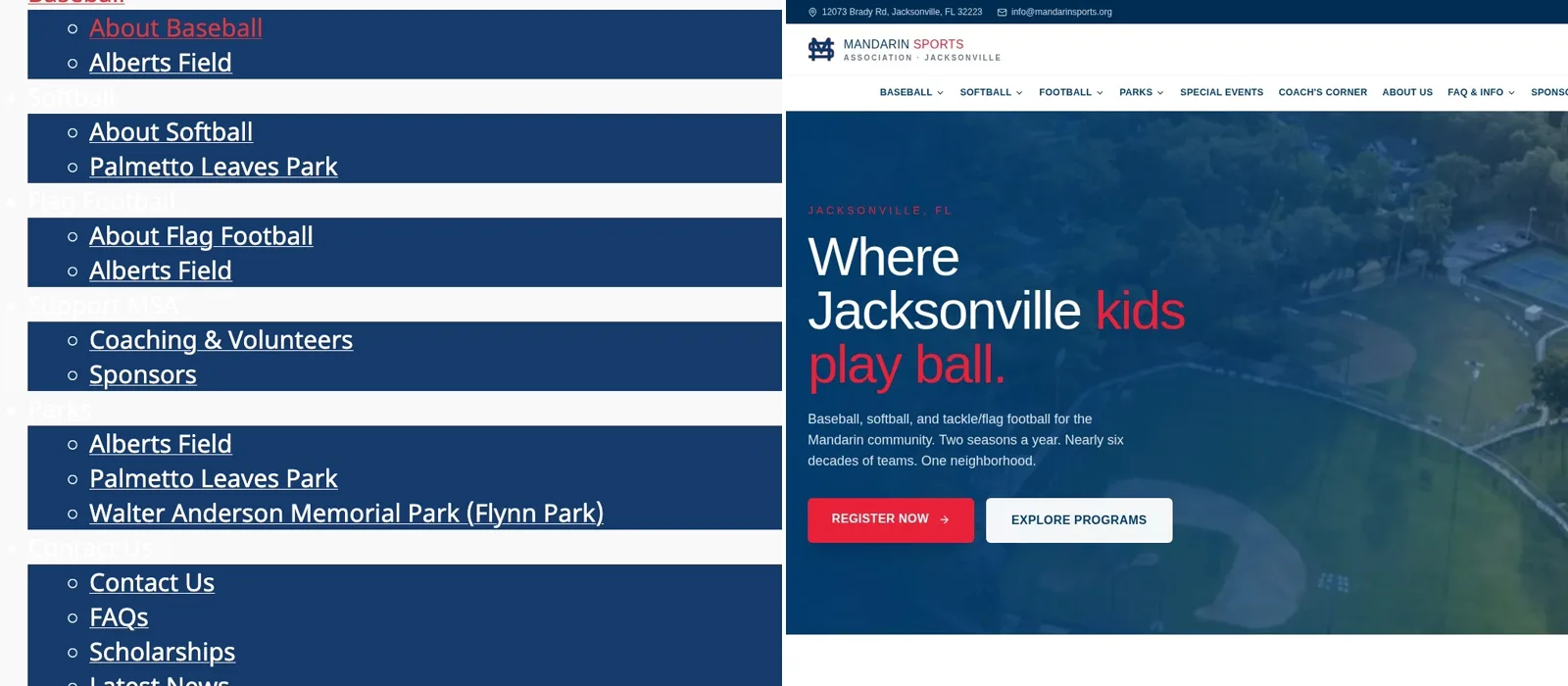
A complete website renovation for a Jacksonville youth sports league. The rebuild reorganized navigation for parents and coaches, brought registration forward, and made season information easier to find.
Read the case study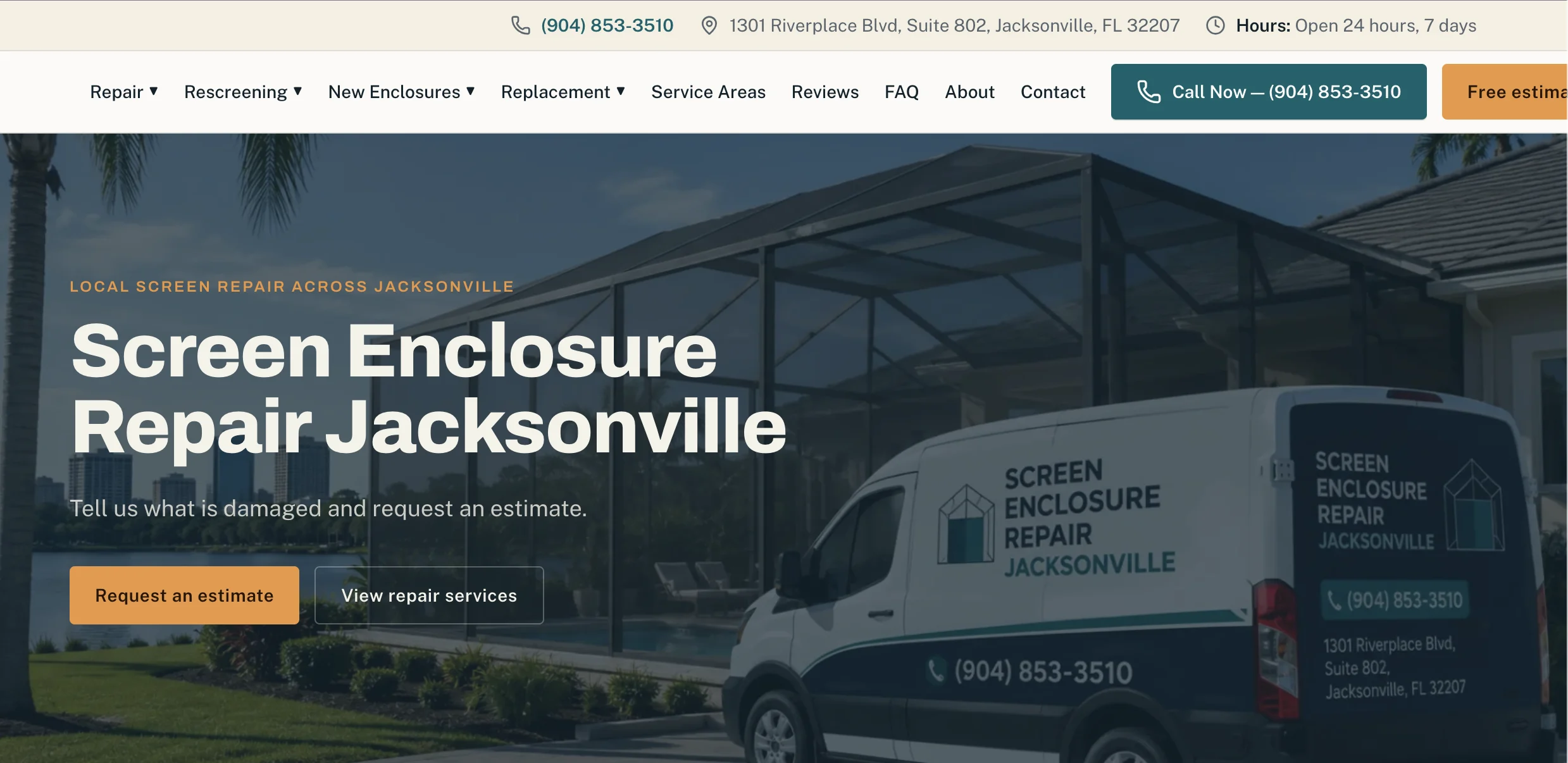
A live service-area website organized around screen repair, pool cages, lanais, torn panels, doors, rescreening, and storm damage across Northeast Florida.
Visit the live site
A mobile-friendly local service website with dedicated gutter services, Jacksonville-area pages, clear estimate calls to action, and a search-focused structure.
Visit the live siteWe look at the current site, its useful pages, customer paths, content, and SEO signals before recommending changes.
The new structure, design, mobile experience, content, forms, and calls to action are shaped around the business goal.
Before launch, we verify important URLs, redirects, metadata, internal links, forms, phone links, and the customer experience.
Most website projects are completed in approximately 2–3 weeks. Rush 1-week launches may be available for qualifying projects once the scope and requirements are clear.
A redesign starts with an existing website, brand, content, URLs, and customer journeys. The goal is to keep what is useful and rebuild what is holding the business back. A new website may start with a blank structure, but both projects still need a clear strategy, content plan, mobile experience, and SEO foundation.
It can if valuable URLs, content, metadata, internal links, canonicals, redirects, or sitemap signals are changed blindly. Jax Web Pro inventories the existing site first and plans URL preservation, migration, and redirects before the new structure replaces the old one.
When an existing URL ranks, converts, earns links, or answers a distinct customer question, keeping it is usually the safer choice. If a change has a clear reason, the old URL should map to the closest useful destination with the appropriate redirect.
Not always. Some pages need editing, some need better hierarchy, and some need new content to answer a real customer question. Existing copy is reviewed against the business, search intent, and conversion path before it is replaced.
Yes. WordPress is one of the platforms a redesign may start from. The first step is reviewing the current pages, content, plugins or integrations, URLs, mobile behavior, and business goals so the scope is based on the actual site rather than the platform name alone.
Most website projects are completed in approximately 2–3 weeks when the scope, content, access, and approvals are ready. Rush 1-week launches may be available for qualifying projects after the requirements are reviewed.
A redesign is not always the right answer. A focused review can separate high-impact fixes—such as mobile navigation, speed, forms, calls to action, or a small set of ranking pages—from changes that would create unnecessary risk.
Before launch, define the actions that matter: calls, forms, bookings, orders, or qualified inquiries. After launch, check those paths alongside indexing, redirects, page speed, analytics, and priority search visibility instead of judging the project on appearance alone.
Send us your current website and the part that is not working. We will review the structure, mobile experience, SEO value, and conversion path before recommending a rebuild.